


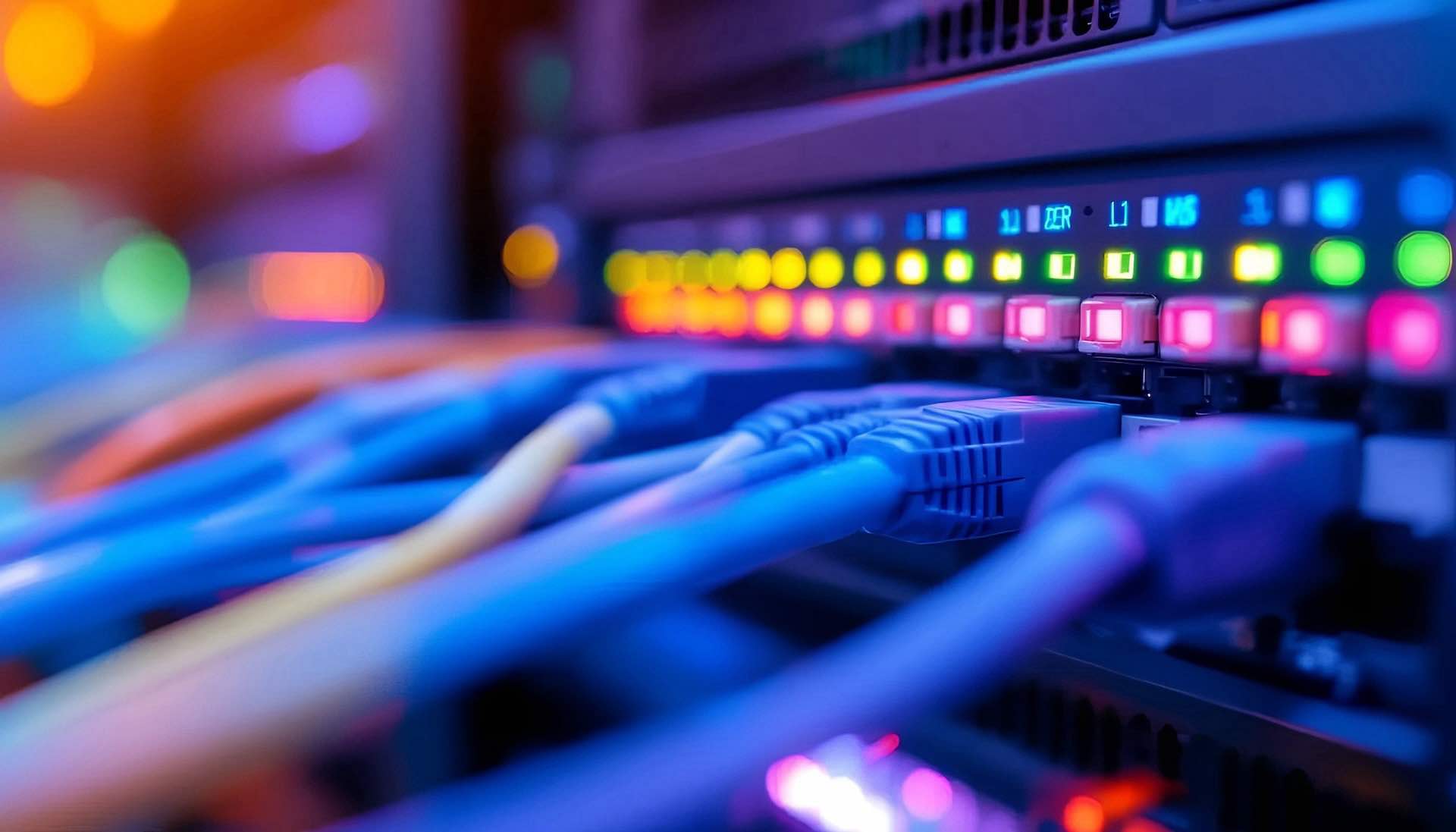
Patch panels organize network cables through centralized cable management and port termination, enabling structured cabling systems for better troubleshooting.
Ever walked into a server room and felt overwhelmed by the maze of cables running everywhere? That’s exactly where a patch panel comes into play. Think of it as the control center for your entire network cabling system – it’s the unsung hero that transforms chaotic wiring into structured cabling through organized port termination points. Whether you’re managing a small office network or a massive data center, understanding patch panels is crucial for maintaining efficient cable management and reliable network organization. Let’s dive into why these seemingly simple devices are absolutely essential for any professional network setup.
Understanding Patch Panel Fundamentals
Definition and Basic Patch Panel Components
A patch panel is essentially a mounted hardware assembly containing multiple ports that consolidate cable connections from different areas of your building. Picture a switchboard operator from decades past – that’s basically what a patch panel does for your network cables. Each panel consists of a metal frame, typically 1U or 2U in height for rack mounting, with rows of connection ports on the front and termination points on the back.
The front face features numbered ports (usually 12, 24, or 48) where you plug in patch cables. These short cables then connect to your active network equipment like switches and routers. On the rear side, you’ll find either punch-down blocks for copper cables or adapter panels for fiber optic connections. This dual-sided design creates a permanent, organized termination point for your building’s structured cabling infrastructure while simplifying cable managementtasks.
How Patch Panels Function in Networks
Here’s how the magic happens: permanent cables run from workstations, wall outlets, and other network endpoints throughout your building, all terminating at the back of the patch panel. These port termination connections are typically more permanent and harder to access. When you need to connect a specific endpoint to network equipment, you simply use a short patch cable from the corresponding port on the panel’s front to your switch or router.
This setup means you’re not constantly plugging and unplugging cables directly from expensive network equipment. Instead, any wear and tear happens at the patch panel ports, which are much cheaper to replace than a damaged switch port. Plus, this arrangement keeps your permanent cabling infrastructure intact while allowing flexible connections on the user-facing side.
Types of Connections Supported
Modern patch panels support various connection types to meet different networking needs. The most common are RJ45 ports for Ethernet connections, supporting everything from Cat5e to Cat8 cables. You’ll also find panels designed for fiber optic cables with LC, SC, or MPO/MTP connectors. Some panels even offer mixed media support, combining copper and fiber connections in a single unit.
The versatility extends beyond just data connections. Many panels now integrate voice, video, and even USB connections through modular keystone jacks. This flexibility ensures your patch panel can handle whatever your network throws at it, from basic internet connectivity to complex audiovisual systems and high-speed storage networks.
The Critical Role of Patch Panels in Network Infrastructure
Centralized Connection Management
Without a patch panel, you’d have cables running directly from every endpoint to your network equipment, creating an unmanageable mess. The patch panel serves as a central hub where all these connections converge in an organized manner. This centralization transforms chaos into order – every cable has its designated spot, labeled and ready for action.
Think about troubleshooting a connection issue. With centralized management through effective cable management practices, you can quickly locate the specific port, test the connection, and make changes without diving into a tangled mess of cables. Network administrators can see at a glance which ports are active, which are available, and how the entire structured cabling system is physically laid out. This visibility is invaluable for both daily operations and long-term planning.
Bridge Between Permanent and Active Equipment
Patch panels create a crucial separation between your building’s permanent cabling infrastructure and your active network equipment. The permanent cables – those running through walls, ceilings, and conduits – terminate at the patch panel and stay put. Your switches, routers, and other gear connect via easily replaceable patch cables.
This separation protects both your infrastructure investment and your expensive network equipment. When you upgrade a switch or reconfigure your network, you’re only dealing with short patch cables at the front of the panel. The permanent cabling remains undisturbed, maintaining its integrity and reducing the risk of damage from repeated handling.
Signal Integrity and Performance
Quality patch panels do more than just organize cables – they preserve signal quality. Each connection point is engineered to maintain the electrical characteristics required for high-speed data transmission. Whether you’re running Gigabit Ethernet or 10-Gigabit connections, a properly installed patch panel ensures your network performs at its rated speed.
The panel’s design minimizes crosstalk between adjacent ports and maintains proper impedance throughout the connection. Shielded panels provide additional protection against electromagnetic interference, crucial in environments with heavy electrical equipment. By maintaining these electrical properties, patch panels help prevent data errors, packet loss, and the frustrating slowdowns that plague poorly organized networks.
Key Benefits of Using Patch Panels

Simplified Cable Organization
The most immediate benefit you’ll notice is the dramatic improvement in cable organization. Instead of hundreds of cables creating a rat’s nest behind your equipment rack, you have neat rows of connections, each in its proper place. This organization isn’t just about aesthetics – though a clean rack certainly looks professional – it’s about functionality.
Well-organized cables improve airflow around your equipment, preventing overheating issues that can cause failures. You can easily trace cables from source to destination, making additions and changes straightforward. When cables are properly managed through a patch panel, you reduce the risk of accidental disconnections and make it easier to maintain proper bend radius requirements for both copper and fiber cables.
Enhanced Troubleshooting Capabilities
When network issues arise – and they always do – a patch panel transforms troubleshooting from a nightmare into a manageable task. Each port is clearly labeled, allowing you to quickly identify and isolate problematic connections. You can easily swap ports to test if an issue is with the permanent cabling or the active equipment.
Testing becomes much simpler too. Cable testers can be connected directly to patch panel ports to verify the integrity of permanent links and port termination quality. You can perform loopback tests, check for continuity, and measure cable performance without disturbing the production network. This accessibility significantly reduces downtime and makes your IT team more efficient while maintaining proper cable management standards.
Scalability and Future-Proofing with Patch Panels
Networks grow – it’s a fact of business life. New employees need connections, departments expand, and technology demands increase. Patch panels make this growth manageable by providing a scalable framework for expansion. Empty ports are ready and waiting for new connections, and adding capacity is as simple as running a new cable to the panel.
Future-proofing goes beyond just adding more connections. When it’s time to upgrade from Cat6 to Cat6a, or from copper to fiber, you can often reuse the same patch panel infrastructure and structured cabling pathways. Modular panels allow you to swap out different connection types as needed, protecting your investment while adapting to new technologies and maintaining organized port termination points.
Protection of Network Equipment
Your network switches and routers represent significant investments. Every time you plug or unplug a cable directly from these devices, you risk damaging the ports. Patch panels take this wear and tear instead, acting as a sacrificial buffer between your expensive equipment and the physical stress of cable management.
The panel also provides strain relief for cables, preventing them from pulling on equipment ports. This protection extends the life of your network gear and reduces maintenance costs. When a port does eventually wear out, replacing a patch panel port or module is far less expensive than replacing an entire switch.
Different Types of Patch Panels
Copper Ethernet Patch Panels
The workhorse of most networks, copper Ethernet patch panels handle your standard RJ45 connections. These panels come in various configurations, from basic unshielded panels for office environments to fully shielded solutions for industrial applications. The key is matching the panel’s category rating to your cabling – Cat6 panels for Cat6 cabling, Cat6a for Cat6a, and so on.
Punch-down style panels require you to terminate each wire individually using a punch-down tool, following either T568A or T568B wiring standards. While this takes more time during installation, it provides a permanent, reliable connection that won’t come loose over time. These panels typically offer the best performance and are preferred for permanent installations where cable management and reliable port termination are critical.
Fiber Optic Patch Panels
As networks demand higher speeds and longer distances, fiber optic patch panels become essential. These panels accommodate various fiber connector types and can handle both single-mode and multimode fiber. They protect delicate fiber connections while maintaining the precise alignment necessary for optical signal transmission.
Fiber panels often include features like sliding trays for easy access, splice cassettes for permanent fiber termination, and high-density options that can accommodate 144 or more fiber connections in just a few rack units. The investment in quality fiber panels pays off through reduced signal loss and easier maintenance of your optical structured cabling infrastructure.
Modular and Keystone Patch Panels
Flexibility defines modular patch panels. Rather than fixed ports, these panels accept snap-in keystone jacks that can be mixed and matched as needed. You might combine RJ45 data ports, RJ11 voice jacks, coax connections, and fiber adapters all in the same panel. This versatility makes them perfect for offices with diverse connectivity needs.
The beauty of keystone systems lies in their adaptability. As your needs change, you can reconfigure the panel without replacing the entire unit. Need to add USB connections for a conference room? Just snap in USB keystone jacks. Converting from copper to fiber? Swap out the RJ45 keystones for fiber adapters. This modularity extends the useful life of your infrastructure investment.
High-Density Solutions
Data centers and large enterprises often need maximum connectivity in minimal space. High-density patch panels answer this need with 48 ports or more in a single rack unit. Some angled panels allow cables to flow naturally to either side, improving cable management without additional horizontal organizers.
These dense configurations require careful planning for cable management and airflow. However, when properly implemented, they maximize your rack space efficiency and can significantly reduce the total footprint of your network infrastructure. Advanced high-density solutions now include features like color-coding systems and integrated cable management to handle the increased cable volume while maintaining proper port termination standards.
Patch Panel Applications and Environments

Data Centers and Server Rooms
In data centers, patch panels are absolutely critical for managing thousands of connections. They create organized zones for different network segments, making it possible to maintain and modify complex networks without disrupting operations. High-density fiber panels handle backbone connections between racks, while copper panels manage server connections.
The scale of data center operations demands meticulous organization. Patch panels enable structured cabling methodologies like top-of-rack and end-of-row configurations. They facilitate quick server deployments and changes, essential for dynamic data center environments where equipment is constantly being added, moved, or upgraded while maintaining efficient cable management practices.
Office Networks and Telecommunications
Every modern office relies on patch panels to connect workstations, phones, printers, and wireless access points. In a typical setup, cables run from office wall outlets back to a telecommunications closet where patch panels provide the interface to network switches through organized port termination. This setup keeps the complex cabling hidden while providing easy access for IT staff to manage the structured cabling system.
Telecommunications applications often require panels that support both data and voice connections. Modern unified communications systems blur the line between traditional phone systems and data networks, making versatile patch panels even more important. The ability to quickly reconfigure connections supports the flexible workspace arrangements that today’s businesses demand.
Industrial and Campus Networks
Industrial environments present unique challenges with extreme temperatures, vibration, and electromagnetic interference. Specialized industrial patch panels feature rugged construction, enhanced shielding, and sometimes special coatings to resist corrosion. They ensure reliable connectivity in manufacturing plants, warehouses, and outdoor installations.
Campus networks spanning multiple buildings rely on patch panels to organize inter-building connections and distribute network access across vast areas. Fiber optic panels handle the long-distance runs between buildings, while copper panels distribute connections within each structure. This hierarchical approach makes campus-wide networks manageable and maintainable.
Patch Panel Installation and Best Practices
Proper Mounting and Placement
Location matters when installing patch panels. Place them at a comfortable working height in your rack – typically eye level when possible. Leave adequate space above and below for cable management hardware and airflow. In larger installations, alternate patch panels with switches following a panel-manager-switch pattern for optimal cable routing and port termination accessibility.
Consider future expansion when choosing placement. Install panels with room to grow, both in terms of additional panels and cable pathways. Ensure adequate lighting and workspace around the panels for maintenance activities. Remember, technicians will need to access both front and rear sides, so don’t mount panels in cramped corners.
Cable Termination Standards
Consistency is king when terminating cables. Choose either T568A or T568B standard and stick with it throughout your installation. While T568B is more common in commercial installations, what matters most is uniformity. Document your chosen standard and ensure all technicians follow it.
Pay attention to the details that affect performance in your structured cabling system. Maintain the twist in cable pairs as close to the termination point as possible – untwisting more than half an inch can degrade performance. Use the correct punch-down tool with the proper blade for your panel type. After termination, test every connection to verify it meets performance specifications for proper port termination.
Labeling and Documentation
A patch panel without proper labeling is like a map without street names – technically functional but practically useless. Develop a clear labeling scheme before installation and apply it consistently. Labels should be durable, legible, and placed on both the panel ports and the cables themselves.
Your labeling scheme should include location information, port numbers, and connection destinations. Many organizations use color-coding to distinguish different network segments or cable types. Document everything in a cable management database or spreadsheet, including test results and installation dates. This documentation becomes invaluable for troubleshooting and planning future changes to your structured cabling infrastructure.
Why Your Network Cannot Function Without One
Cost of Disorganized Cabling
Operating without patch panels might seem like a cost savings initially, but the long-term expenses tell a different story. Disorganized cabling leads to extended downtime during troubleshooting, as technicians waste hours tracing unlabeled cables. Simple changes become major projects when you can’t easily identify or access connections.
The hidden costs multiply quickly. Poor cable management restricts airflow, leading to equipment overheating and premature failure. Tangled cables are more likely to be damaged during maintenance, requiring emergency replacements. When problems arise, the mean time to repair (MTTR) skyrockets without organized port termination points. These inefficiencies translate directly to lost productivity and increased operational expenses.
Compliance and Industry Standards
Most industries have specific requirements for structured cabling systems, and patch panels are often mandatory components. Standards like TIA-568 and ISO/IEC 11801 specify how commercial buildings should implement their cabling infrastructure. These aren’t just suggestions – they’re requirements for warranty coverage and often for regulatory compliance.
Insurance companies and safety inspectors look for properly organized cabling systems. Tangled, unmanaged cables can be fire hazards and may violate local building codes. In healthcare, finance, and government sectors, proper cable management through patch panels may be required for data security compliance. Failing to meet these standards can result in fines, failed inspections, and liability issues.
Long-Term ROI and Efficiency
The return on investment for patch panels becomes clear when you consider the total cost of ownership. While the initial purchase and installation require capital investment, the operational savings are substantial. Reduced troubleshooting time, easier maintenance, and extended equipment life all contribute to lower ongoing costs.
Consider the efficiency gains: moves, adds, and changes that once took hours now take minutes. Network upgrades that required complete re-cabling can often reuse existing infrastructure. The ability to quickly adapt to business changes without major disruption has real value. When you factor in reduced downtime, lower maintenance costs, and improved network reliability, patch panels pay for themselves many times over.
Your network’s efficiency directly impacts business operations. Fast, reliable connections keep employees productive. Quick problem resolution minimizes revenue loss from outages. The professional appearance of well-organized cabling even impresses clients and auditors. These benefits compound over time, making patch panels one of the best investments in your network infrastructure.
Understanding what a patch panel is and why your network needs one isn’t just technical knowledge – it’s essential for anyone responsible for network infrastructure. These seemingly simple devices transform chaotic cabling into organized systems that are easier to manage, troubleshoot, and scale. From improving network organization to ensuring compliance with industry standards, patch panels prove their worth every day in networks worldwide. Whether you’re building a new network or upgrading an existing one, investing in quality patch panels and proper structured cabling will pay dividends in reliability, efficiency, and peace of mind for years to come.