


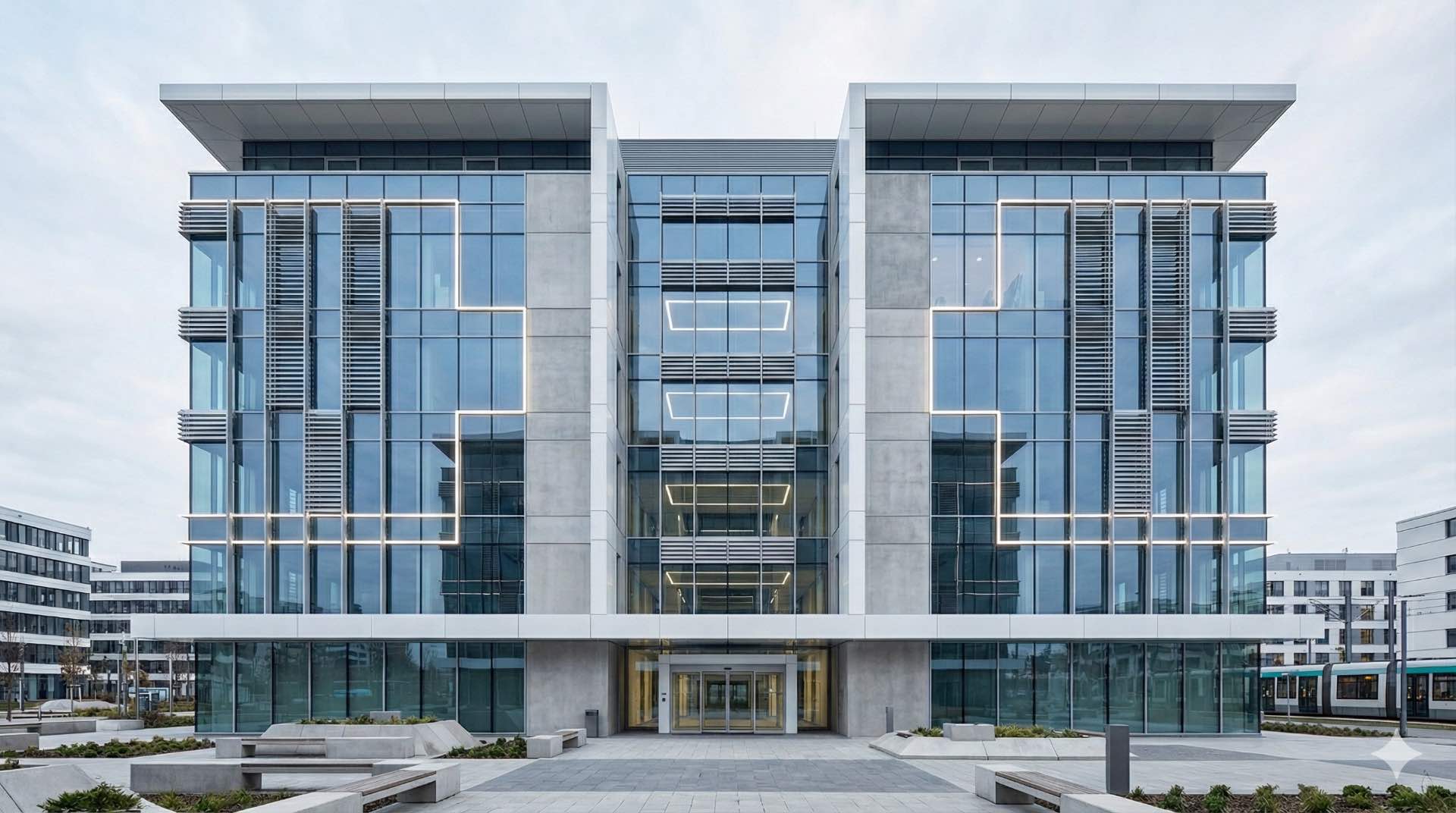
In smart buildings, data driven intelligence uses IoT sensors, edge analytics and automated decisions to improve efficiency and guide smarter everyday actions.
Smart buildings operate through data driven systems that execute automated decisions without waiting for human input. IoT sensors monitor temperature, occupancy, air quality and power consumption across every floor, while edge analytics processes information locally to trigger immediate responses. This intelligence transforms passive structures into responsive environments.
When Buildings Start Making Their Own Choices
Traditional facilities depend on scheduled maintenance and manual adjustments. You’ll find technicians walking floors with clipboards, recording conditions and troubleshooting reactively. This approach worked for decades, but it can’t match the responsiveness smart buildings deliver through data driven operations.
Modern smart buildings collect continuous feedback. Sensors distributed throughout smart buildings capture conditions in real time. Edge analytics evaluates these inputs instantly, enabling automated decisions that adjust systems before occupants notice problems. The facility itself tracks performance and corrects issues proactively.
How Facilities Move Beyond Manual Control
Connected devices communicate constantly in smart buildings. Each sensor feeds current conditions into platforms that process information. Controllers interpret signals and execute automated decisions based on programmed logic. Your HVAC adjusts based on actual occupancy rather than fixed schedules, with edge analytics running locally to process inputs within milliseconds.
Lighting responds to natural daylight through photocells. Security systems alert staff when sensors detect unusual patterns. Coordination across systems eliminates the guesswork that manual control requires. You’re no longer estimating when equipment needs service—facilities track health continuously through analytics.
Why Data Becomes the Driving Force
Every device generates telemetry. Motion detectors, temperature probes and power meters create constant data streams. When you aggregate information from IoT sensors, patterns emerge that reveal inefficiencies. Processing identifies which zones waste energy, which rooms sit vacant, which equipment operates outside normal parameters.
Insights show what’s actually happening versus what operators assume. Continuous monitoring through sensors detects subtle degradation that leads to failures. Analytics spots trends that manual observation misses. Smart buildings leveraging data driven intelligence act faster and more accurately than human-only operations.
The Shift Toward Predictive Operations
Older building management systems logged events for later review. Modern facilities act instantly through automated decisions triggered by edge analytics. Temperature spikes prompt cooling adjustments within seconds. Occupancy changes detected by sensors prompt ventilation modifications before air quality drops.
Predictive algorithms analyze trends to forecast problems in smart buildings. Machine learning models using edge analytics identify when equipment operates abnormally based on sensor readings. You’ll receive alerts before failures occur in smart buildings, transforming maintenance from emergency response into planned optimization through automated decisions guided by data driven intelligence.
The Intelligence Layer
Intelligence emerges from how IoT sensors, processing platforms and control systems integrate in smart buildings. Each component serves specific functions, but smart buildings achieve value through data driven coordination.
Sensors Delivering Continuous Insight
Environmental sensors measure temperature, humidity, CO2 and volatile organic compounds throughout smart buildings. Occupancy sensors use passive infrared, ultrasonic or camera detection to track room usage in smart buildings. Energy meters monitor electrical load at circuit and panel levels. Asset tracking tags report equipment location.
These IoT sensors operate autonomously, transmitting readings that enable operations. Facilities depend on accurate measurements for edge analytics to generate reliable automated decisions. Calibration procedures ensure sensors maintain precision. Device health monitoring catches failing equipment before it compromises control.
Edge Processing Enabling Fast Decisions
Edge analytics processes information close to its source. Controllers embedded in HVAC units, lighting fixtures or security panels analyze inputs without sending everything to central servers. This reduces network traffic and enables sub-second response times for automated decisions.
Local processing handles simple logic efficiently. If sensors report temperature exceeding thresholds, systems activate cooling. When motion stops, fixtures dim automatically. Executing control at the edge responds faster than cloud-dependent architectures.
Platforms Connecting Systems
Building management systems integrate HVAC, lighting, power and security into unified interfaces. You’ll see equipment status, active alarms and performance metrics from single dashboards. Data driven platforms coordinate automated decisions across previously independent systems using sensor inputs processed by edge analytics.
Modern platforms support digital twins that create virtual representations. You can simulate changes before implementing them, testing scenarios and predicting outcomes through modeling. This reduces trial-and-error approaches.
Protocols Keeping Devices Aligned
Interoperability depends on standardized protocols. BACnet enables HVAC communication. Modbus connects industrial equipment. MQTT provides lightweight messaging for resource-constrained IoT sensors. These standards ensure coordination works across vendors.
Protocol gateways translate between incompatible systems. Legacy equipment can connect to modern edge analytics platforms through these bridges. Integration extends useful infrastructure life.

How Data Turns Into Actions
Smart buildings transform IoT sensor measurements into meaningful actions through data driven workflows processed by edge analytics.
Triggering Actions From Real-Time Events
Event-driven architecture responds immediately to changing conditions. When sensors detect people entering conference rooms, systems activate lighting and adjust temperature through automated decisions. Processing tracks occupancy and initiates energy-saving modes after departures.
Complex event processing handles multi-condition scenarios. If sensors report rising temperature AND increasing humidity AND above-normal occupancy, systems trigger additional cooling capacity. Logic correlates multiple inputs before acting.
Using Predictive Models
Machine learning enhances operations by learning normal patterns from IoT sensor data. When equipment behavior deviates from baselines, edge analytics flags potential issues through automated decisions. Models detect anomalies that rule-based systems miss.
A chiller drawing slightly more power than usual might indicate problems. Gradual temperature drift could signal duct blockages. Using predictive edge analytics catches these issues before failures occur, scheduling maintenance that minimizes disruption.
Dashboards Revealing Patterns
Visualization transforms raw sensor data into actionable intelligence. Heat maps show energy consumption across zones. Trend lines reveal equipment performance over time. Comparative analytics highlight which systems operate efficiently in data driven operations.
Facility managers can drill from building-wide overviews to individual details. You’ll spot patterns explaining cost variations through analysis. Historical information enables year-over-year comparisons that measure improvement from automated decisions implemented by edge analytics.
Systems That Benefit Most
While every system gains from operations powered by data driven intelligence, certain applications deliver particularly dramatic improvements through IoT sensors, edge analytics and automated decisions.
HVAC Optimization
Heating and cooling typically consume 40-60% of energy. Traditional systems run on fixed schedules. Control adjusts operation based on occupancy detected by sensors, weather forecasts and thermal conditions analyzed. Optimization happens continuously.
Demand-controlled ventilation modifies fresh air intake based on CO2 levels measured by IoT sensors rather than assumptions. Facilities using edge analytics for automated decisions achieve 20-40% energy reductions while maintaining comfort through data driven HVAC management.
Energy Management
Real-time monitoring through sensors identifies equipment operating unnecessarily. Processing analyzes consumption data, enabling decisions about load management. Control sheds non-critical loads during peak demand when electricity costs spike.
Load shedding temporarily reduces consumption through automated decisions triggered by edge analytics evaluating pricing signals and available capacity based on IoT sensor data. You’ll cut costs without impacting critical operations.
Security Coordination
Smart buildings integrate security through coordination of sensors. When access control detects unauthorized attempts, systems trigger responses across multiple platforms. Cameras record at higher resolution, nearby doors lock, personnel receive alerts—all coordinated automatically.
Behavioral analytics using IoT sensors and edge analytics identify suspicious patterns—tailgating through secure doors, vehicles lingering in restricted zones, repeated failed access attempts. Coordination enables responses that human operators couldn’t execute as quickly.
Designing Reliable Architecture
Success requires thoughtful planning of IoT sensor placement, edge analytics infrastructure and control logic for effective data driven operations.
Planning Sensor Placement
Sensor location determines data quality. Temperature sensors near windows provide misleading readings. Occupancy sensors with obstructed views miss activity, causing inappropriate responses. Facilities need strategic placement for accurate control.
Zone mapping divides buildings into logical areas. Different spaces need different strategies. Edge analytics processes data from sensors grouped by function, enabling appropriate automated decisions for each zone through data driven management.
Choosing Processing Locations
Smart buildings balance centralized and distributed computing. Edge analytics handles time-critical automated decisions locally using IoT sensor data. Cloud platforms provide historical analysis. Architectures use hybrid approaches where sensors feed both edge systems for immediate responses and cloud platforms for long-term optimization.
Critical safety functions never depend solely on internet connectivity. Processing must handle local sensor data independently. Data driven reliability requires autonomous operation when networks fail.
Integration Standards
Interoperability enables facilities to mix technologies. IoT sensors from multiple vendors feed platforms through standardized protocols. Open standards ensure sensors, processing systems and controls communicate reliably for coordination.

Operational Advantages
Smart buildings implementing data driven operations through IoT sensors, edge analytics and automated decisions deliver measurable benefits.
Efficiency Gains
Facilities automatically match consumption to demand through control. Empty floors don’t receive full service based on sensor inputs. Optimization happens continuously. You’ll see 20-40% operating cost reductions through data driven management.
Dynamic scheduling adapts operation. IoT sensors report actual conditions to systems that calculate optimal responses. Scheduling replaces static programs that waste energy.
Predictive Maintenance
Equipment failures disrupt operations. Analytics using IoT sensor data identify degrading components before breakdowns. Edge analytics processes performance trends, enabling decisions about maintenance timing that prevent emergency repairs.
Condition-based maintenance replaces time-based servicing. Sensors monitor actual equipment health. Processing determines replacement needs, triggering work orders. This approach reduces unnecessary service while preventing failures.
Enhanced Experience
Occupants notice when facilities respond to needs through control. Environments adapt automatically using sensors and analytics. Automated decisions maintain comfort without manual intervention, improving satisfaction through responsive operations.
Responsible Implementation
Smart buildings require careful attention to security and privacy when implementing data driven operations through IoT sensors, edge analytics and automated decisions.
Securing Systems
Building automation controls physical infrastructure. Compromised systems could execute malicious actions. Security protects IoT sensors and control platforms. Facilities need network segmentation isolating operational technology from IT networks.
Encryption protocols protect data traveling between sensors and processing systems. Authentication prevents unauthorized changes. Security ensures only approved personnel modify configurations or rules.
Privacy Requirements
Occupancy tracking through IoT sensors collects personally identifiable information. Operations using edge analytics must comply with regulations. Facilities should minimize data collection and explain how processing uses information for automated decisions.
Practical Challenges
Implementing smart buildings with full capabilities involves obstacles when deploying IoT sensors, edge analytics and automated decisions.
Legacy Integration
Existing equipment lacks connectivity. Retrofit sensors add monitoring to legacy systems, enabling management. Facilities can gradually integrate sensors and analytics while maintaining existing infrastructure through careful planning.
Data Quality Management
More sensors don’t automatically improve responses. Poorly calibrated devices generate misleading information. Reliability requires validation of IoT sensor readings. Facilities need statistical filtering removing noise from data feeding edge analytics.
Best Practices
Long-term success requires strategic approaches to data driven operations using IoT sensors, edge analytics and automated decisions.
Prioritizing Value
Not every automated decision justifies cost. Focus capabilities where IoT sensors and edge analytics deliver measurable returns. Prioritize energy optimization before less valuable applications.
Continuous Optimization
Initial configurations rarely prove optimal. Improvement requires monitoring how automated decisions perform. Edge analytics platforms learn from IoT sensor patterns. Machine learning improves responses continuously.
The Future of Intelligent Facilities
The trajectory points toward increasingly autonomous smart buildings with sophisticated data driven capabilities through enhanced IoT sensors, edge analytics and automated decisions.
Smart buildings implementing comprehensive data driven control through IoT sensors, edge analytics and automated decisions transform facility management fundamentally. Intelligence turns passive structures into responsive environments that optimize energy, enhance security and maintain comfort. Operations shift from reactive problem-solving to proactive optimization as facilities execute strategies using sensors and analytics to make decisions that serve occupants better while consuming fewer resources.