



Network architecture combines switching equipment, network security, and enterprise networks components for reliable business connectivity.
Building effective network architecture requires understanding the fundamental network components that power modern businesses. Today’s enterprise networks demand robust infrastructure combining switching equipment and comprehensive network security to support digital operations. Organizations rely on these interconnected systems to enable communication, data sharing, and application delivery across their entire infrastructure. The right network architecture creates a foundation for growth, supports remote workforces, and integrates cloud services seamlessly. Understanding network architecture principles helps organizations build scalable, secure, and efficient infrastructure.
Understanding Network Architecture Fundamentals and Design
Network architecture defines how different network components connect and communicate within enterprise networks. This blueprint determines data flow patterns, security boundaries, and performance characteristics across your entire infrastructure. Modern network architecture supports hybrid environments where on-premises systems work alongside cloud services. Well-designed network architecture prioritizes both current requirements and future scalability. The network architecture establishes protocols for device communication and sets standards for equipment selection. A hierarchical network architecture design typically includes core, distribution, and access layers, each serving specific purposes in the overall network ecosystem.
Switching Equipment: Essential Network Components for Connectivity
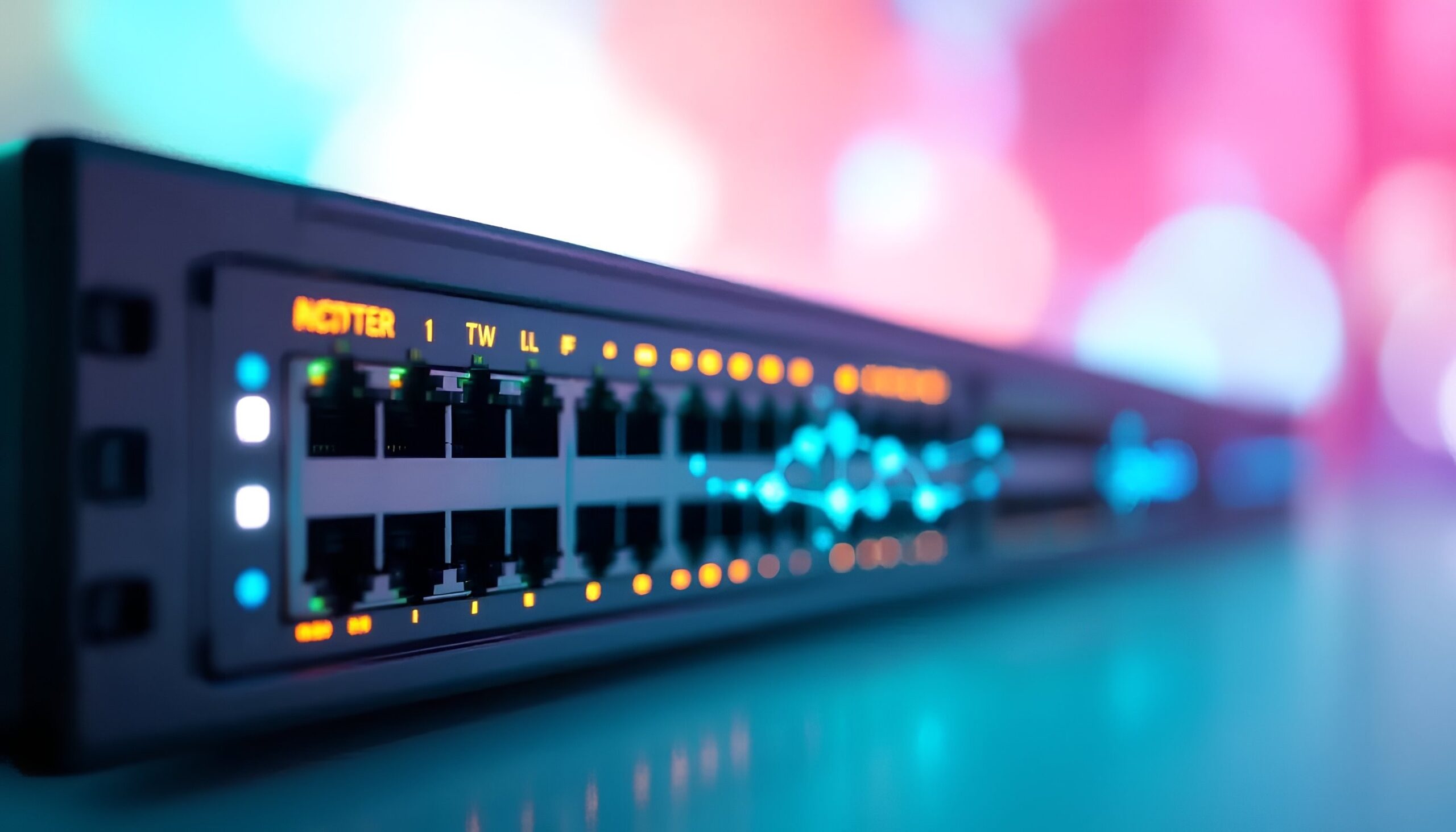
Switching equipment forms the backbone of local area networks by directing data between connected devices. These network components operate at high speeds to ensure smooth communication within buildings and campuses. Modern switching equipment operates at wire speed, forwarding packets as fast as they arrive without introducing delays. Quality switching equipment determines how efficiently data moves between computers, printers, servers, and other networked devices.
Types of Network Switches and Switching Equipment
Managed switching equipment offers advanced configuration options and monitoring capabilities for enterprise networks. These devices provide granular control over traffic prioritization, VLANs, and security settings. IT teams can adjust switching equipment parameters to optimize performance, monitor port statistics, and troubleshoot connectivity issues.
Unmanaged switching equipment works right out of the box with minimal configuration for small deployments. Layer 3 switching equipment combines routing capabilities with traditional switching functions, reducing the need for separate routing hardware. Stackable switching equipment can be interconnected to function as a single logical device, simplifying management while providing redundancy and scalability.
Power over Ethernet (PoE) in Switching Equipment
PoE technology delivers electrical power through network cables to connected devices, eliminating separate power supplies for IP cameras, wireless access points, and VoIP phones. Modern switching equipment with PoE capabilities includes PoE (802.3af) providing 15.4 watts, PoE+ (802.3at) delivering 30 watts, and PoE++ (802.3bt) supplying up to 90 watts per port. Centralized power management through PoE switching equipment simplifies backup power planning, allowing a single UPS system to protect all connected devices during outages.
Switch Management and Configuration for Network Security
Proper switching equipment configuration establishes VLANs to segment traffic and improve security. Network security improves significantly when broadcast domains are appropriately sized, reducing the attack surface. Quality of Service (QoS) settings prioritize time-sensitive applications like video conferencing and VoIP, ensuring critical traffic receives necessary bandwidth during congestion. Port security features in switching equipment restrict which devices can connect to specific switch ports through MAC address filtering and 802.1X authentication, forming essential network security controls.
Routing Devices: Critical Network Components for Connectivity
Routing equipment connects separate network segments and directs traffic between them intelligently. These essential network components make forwarding decisions based on destination addresses and network conditions, determining the optimal path for data traveling between different locations. Routing network components play a vital role in enterprise networks infrastructure.
Enterprise Router Functions and Network Components
Routers maintain routing tables that map network destinations to specific paths. Dynamic routing protocols like OSPF and BGP automatically update these tables as network topology changes. Border routers connect your organization to the internet and implement security policies at the network perimeter through network address translation (NAT) and access control lists. Internal routing supports communication between departments and locations, with core routing network components handling high-volume traffic between major network segments.
VPN and Secure Connectivity for Network Security
Virtual Private Networks create encrypted tunnels for secure remote access, allowing employees to safely connect to corporate resources from any location. Site-to-site VPNs link branch offices to headquarters over public internet connections using protocols like IPsec for network security. Remote access VPNs authenticate individual users before granting network access, with multi-factor authentication adding another network security layer. Split tunneling options route only corporate traffic through the VPN, improving performance while maintaining network security standards for general internet use.
Wireless Infrastructure: Modern Network Components for Mobility
Wireless networks provide mobility and flexibility that wired connections cannot match. Modern enterprise networks integrate wireless seamlessly with wired infrastructure, increasing productivity when employees can work from anywhere within facilities. Wireless network components have become essential in today’s mobile workplace environments.
Access Points and Controllers as Network Components
Access points broadcast wireless signals that client devices connect to. Enterprise-grade APs support multiple SSIDs for different user groups and security levels, separating guest traffic from employee devices. Wireless controllers centrally manage multiple access points across locations, allowing IT teams to adjust settings across hundreds of APs from a single interface. Mesh networking extends coverage to areas where cable installation is impractical, creating redundant paths back to the wired network through wireless network components.
Wireless Standards and Coverage
Wi-Fi 6 and Wi-Fi 6E deliver faster speeds and better performance in dense environments using advanced technologies like OFDMA and MU-MIMO. Dual-band operation allows devices to connect on either 2.4 GHz or 5 GHz frequencies, with smart APs automatically steering clients to the optimal frequency. Coverage planning tools help determine AP quantity and placement, with site surveys measuring signal strength and identifying interference sources.
Mobile Device Integration
Mobile device management integrates smartphones and tablets into corporate networks securely, enforcing security policies and enabling remote wipe capabilities. Wireless guest access provides internet connectivity for visitors without exposing internal resources through captive portals. Location services track device positions for wayfinding and asset management, supporting applications from emergency response to inventory tracking.
Network Security Appliances: Essential Protection Components
Network security appliances protect against evolving cyber threats targeting enterprise networks. These specialized network security devices inspect traffic, block attacks, and enforce access policies through defense-in-depth strategies. Implementing robust network security measures ensures business continuity and data protection.
Firewalls and Intrusion Prevention for Network Security
Next-generation firewalls inspect application-layer traffic beyond basic port filtering, identifying specific applications regardless of port numbers used. Intrusion prevention systems detect and block exploit attempts in real-time through signature databases and behavioral analysis, strengthening network security posture. Unified threat management appliances combine firewall, antivirus, web filtering, and VPN services in single devices for comprehensive network security protection.
Network Access Control Systems and Network Security
NAC solutions verify device health before allowing network access, checking antivirus status, patch levels, and configuration compliance for improved network security. 802.1X authentication requires credentials before granting network connectivity across wired and wireless switching equipment, enhancing overall network security. Guest isolation restricts visitor devices to internet-only access, protecting internal resources from potentially compromised guest devices through effective network security measures.
Security Monitoring Tools for Network Security Management
Security information and event management platforms aggregate logs from across your infrastructure, with correlation engines identifying patterns indicating potential network security incidents. Network behavior analytics establish baselines of normal activity, catching insider threats and compromised credentials that enhance network security. Packet capture tools record network traffic for forensic analysis during network security incident response and investigation.
Network Management Systems: Core Network Components for Control
Effective management systems provide visibility and control across distributed enterprise networks. These platforms monitor performance, automate routine tasks, and simplify troubleshooting dramatically. Network management network components improve IT team efficiency significantly.
Monitoring and Performance Analytics
Real-time dashboards display network health metrics and performance indicators, with traffic graphs showing bandwidth utilization across links and devices. Alerting systems notify administrators when thresholds are exceeded through email, SMS, or mobile apps. Historical data enables capacity planning and trend analysis, informing infrastructure upgrade decisions with data-driven insights.
Configuration Management
Centralized configuration repositories store device settings and change history with version control tracking modifications. Automation tools deploy configuration changes across multiple devices simultaneously using templates that ensure consistency. Compliance monitoring verifies devices maintain approved security settings, detecting configuration drift from established baselines.
Automated Network Operations
Intent-based networking translates business requirements into network configurations automatically, focusing on desired outcomes rather than technical details. Self-healing networks detect failures and automatically reroute traffic using redundant paths. Predictive maintenance uses machine learning to forecast equipment failures by analyzing temperature trends and error rates.
Cabling and Physical Infrastructure: Foundation Network Components
Physical connectivity forms the literal foundation supporting all other network components. Proper cabling installations ensure reliable signal transmission and simplify maintenance, as even the best electronic equipment cannot overcome poor cabling. These physical network components determine overall network reliability.
Structured Cabling Standards
TIA/EIA standards define best practices for commercial building cabling, ensuring interoperability and future-proofing. Horizontal cabling connects work areas to telecommunications rooms using copper cables, with Cat6 supporting 1 Gbps and Cat6A reaching 10 Gbps. Backbone cabling links telecommunications rooms using fiber optic cables, with multi-mode fiber serving shorter distances and single-mode fiber extending for kilometers.
Fiber Optic vs Copper Connectivity
Fiber optic cables transmit data as light pulses through glass strands, supporting longer distances and higher speeds with immunity to electromagnetic interference. Copper cabling remains cost-effective for short connections under 100 meters, with Cat6A cables supporting 10 Gbps speeds. Hybrid approaches use fiber for backbone and copper for access connections, balancing performance with budget constraints.
Cable Management Best Practices
Organized cable pathways simplify troubleshooting and reduce installation time, with cable trays and conduits protecting cables from physical damage. Separation between power and data cables prevents electrical interference, typically maintaining at least 12 inches between them. Documentation showing cable routes and termination points proves essential, preventing accidental cuts during renovations.
Network Design Principles: Building Robust Network Architecture
Sound design principles transform individual network components into cohesive enterprise networks. These guidelines ensure your network architecture meets current needs while accommodating future growth. Strategic network architecture planning prevents costly redesigns down the road by building flexibility into your infrastructure from the start.
Scalability and Future Growth in Network Architecture
Modular designs allow capacity expansion without wholesale replacement. Stackable switches and chassis-based systems grow incrementally as organizations add users and locations. Bandwidth planning considers application trends and user growth projections, typically designing for two to three times current peak utilization.
IP address planning allocates sufficient space for device growth over several years. With IoT devices and BYOD policies expanding device counts rapidly, many organizations now implement IPv6 to ensure virtually unlimited address space for modern network architecture requirements.
Redundancy and High Availability in Network Architecture
Redundant components eliminate single points of failure throughout network architecture infrastructure. Dual power supplies, backup links, and clustered systems maintain operation during failures. Business continuity depends on resilient network architecture design.
Spanning Tree Protocol prevents network loops while providing alternate paths in network architecture. Modern variants like Rapid Spanning Tree converge quickly during topology changes. These protocols balance redundancy with operational efficiency.
Link aggregation combines multiple connections for increased bandwidth and failover. Traffic distributes across member links for load balancing. Automatic failover maintains connectivity if individual links fail in well-designed network architecture.
Performance Optimization Strategies for Network Architecture
Traffic shaping controls bandwidth consumption by specific applications or users. These policies prevent bandwidth-hungry applications from starving critical services during peak usage periods. Your network resources get allocated according to business priorities, ensuring essential operations maintain performance even under heavy load.
Caching systems store frequently accessed content locally. This reduces WAN bandwidth consumption and improves response times for common resources like software updates and web content. Users experience faster access while reducing costs associated with internet circuits.
WAN optimization technologies compress and deduplicate data crossing expensive links. These techniques reduce bandwidth requirements for branch offices by 50-90% in many cases. Organizations save money while improving application performance, and all five keywords including network architecture, enterprise networks, network components, switching equipment, and network security remain essential for successful implementations.