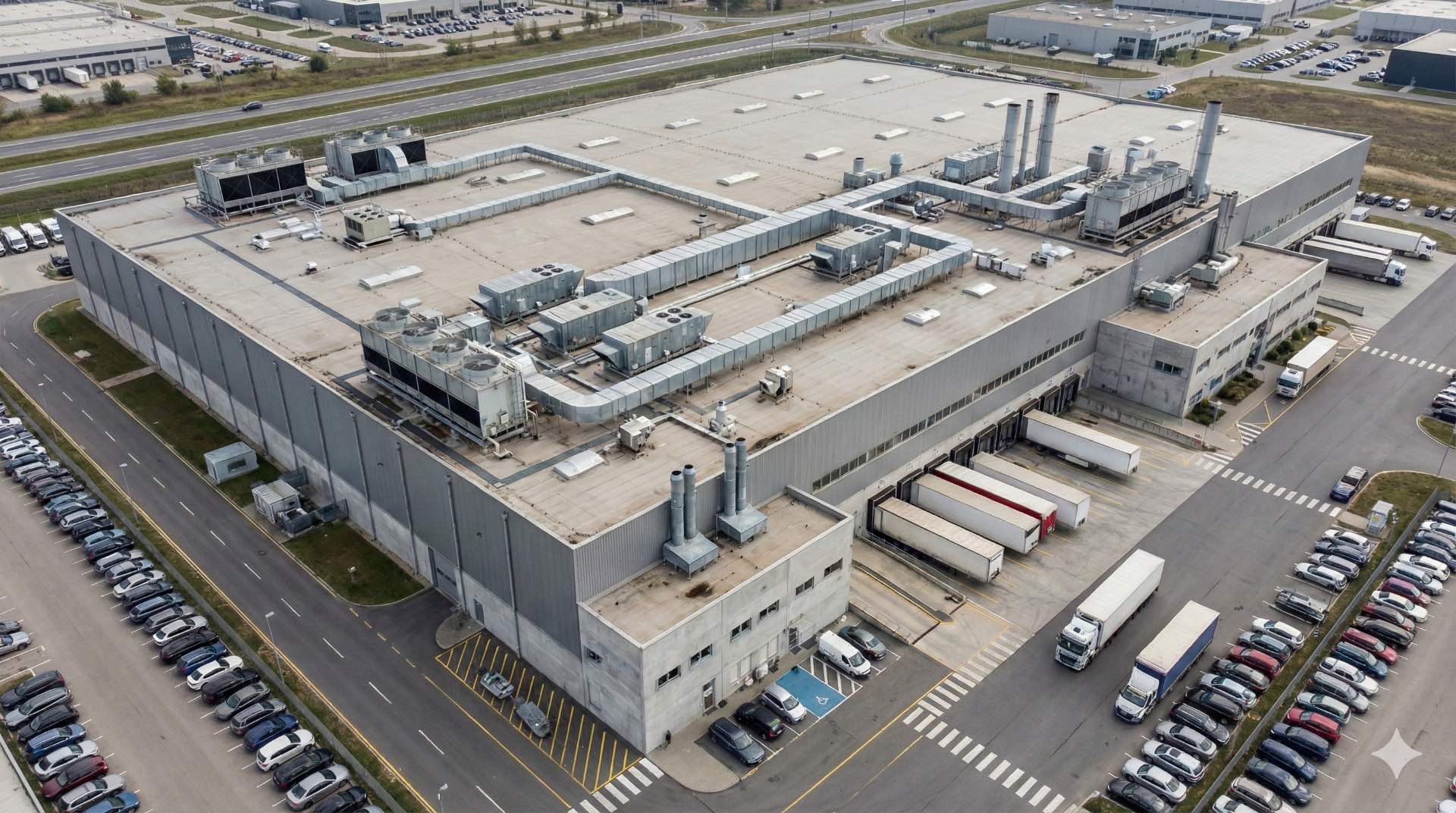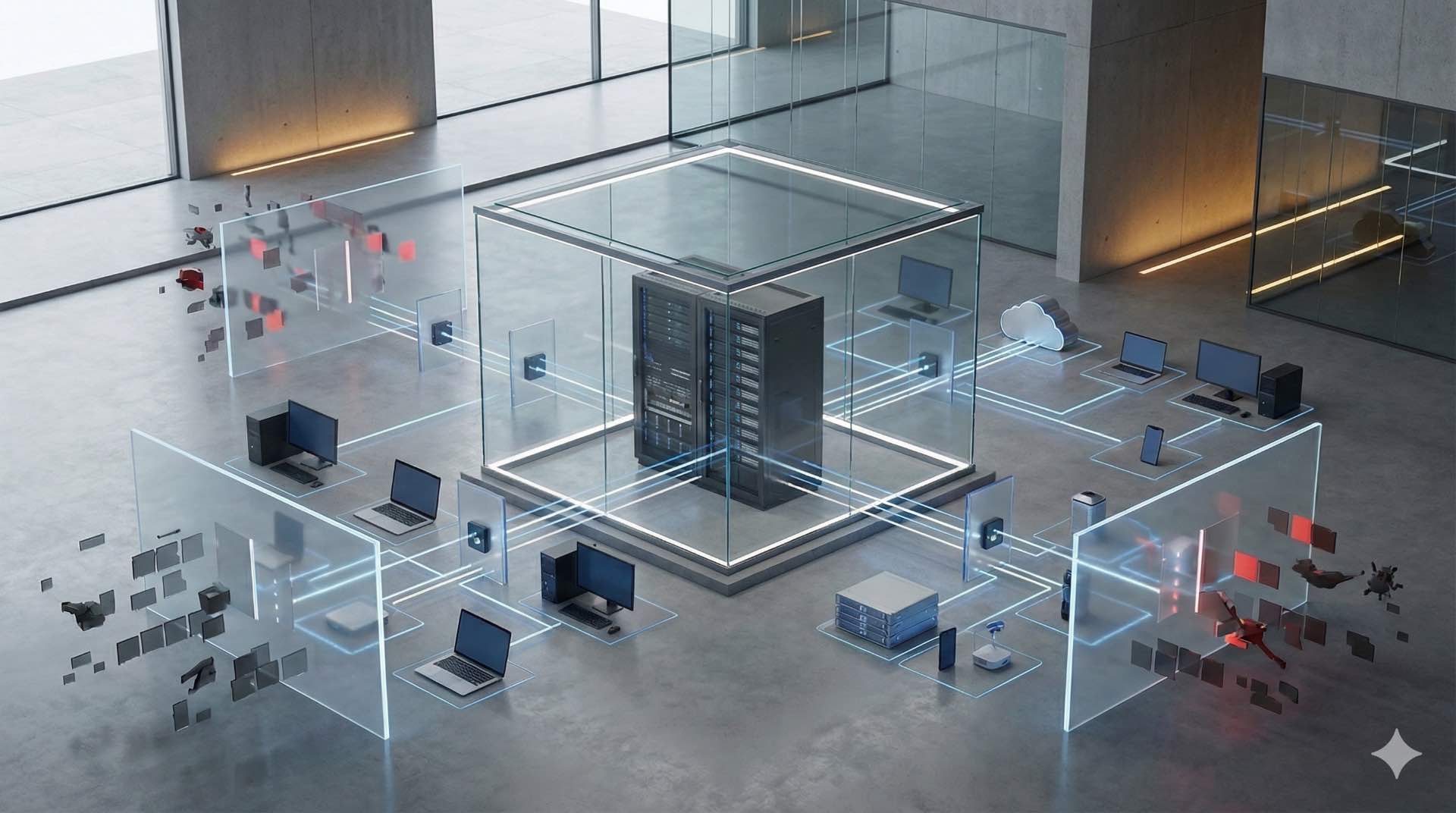

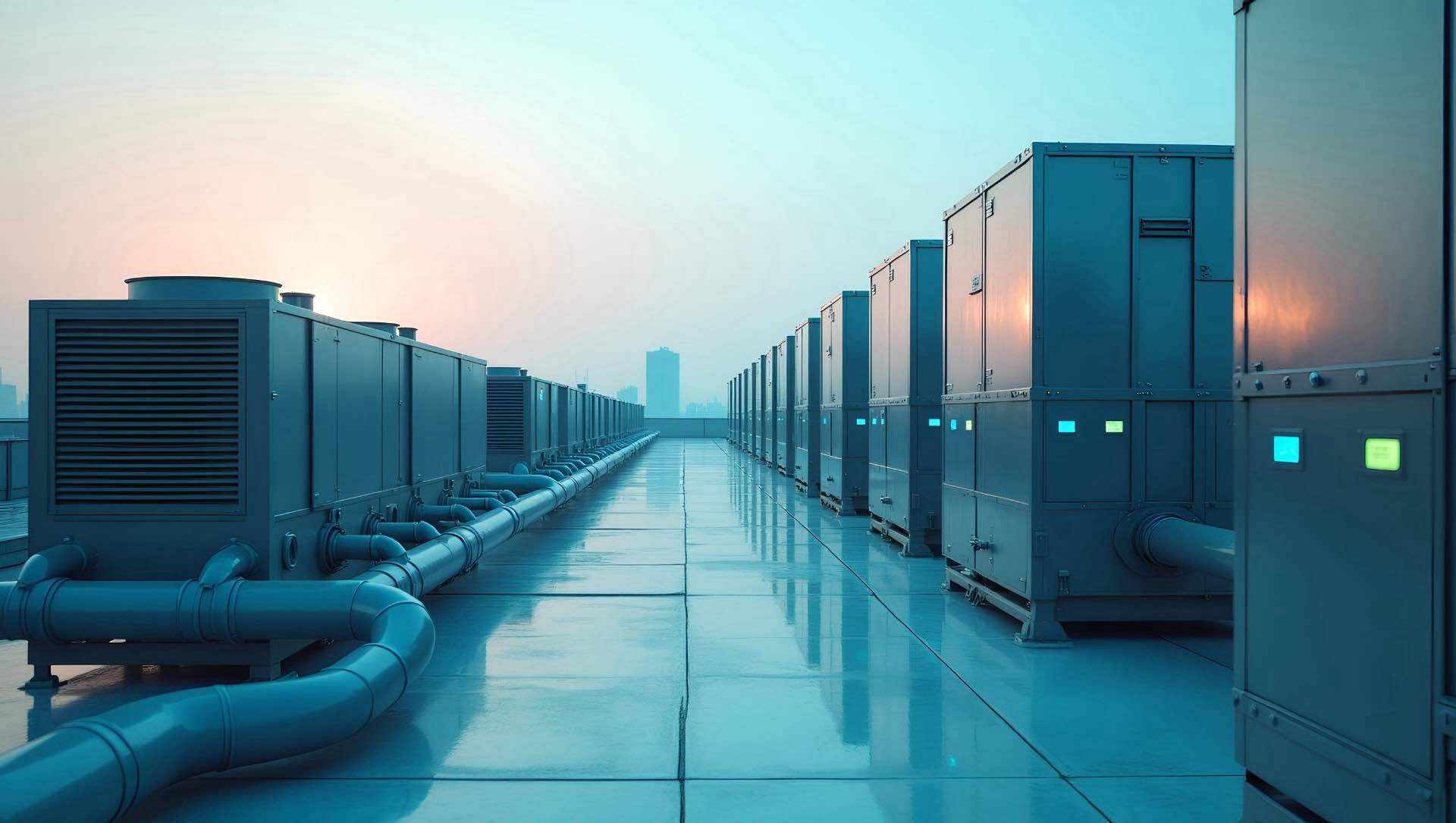
HVAC, heating systems, ventilation systems, cooling systems and air quality are explained in depth to help engineers design efficient, healthy buildings.
Modern buildings depend on HVAC infrastructure to maintain comfortable, productive environments year-round. Heating systems warm spaces during cold months while ventilation systems introduce fresh outdoor air and exhaust stale indoor air continuously. Cooling systems remove heat and humidity during warm periods, and together these subsystems regulate air quality to protect occupant health and equipment performance. Every installation requires heating systems for thermal comfort, ventilation systems for fresh air delivery, cooling systems for temperature control, and air quality management for health protection.
Introduction to HVAC Systems
What Is an HVAC System?
An environmental control system manages temperature, humidity, and air movement inside buildings. Engineers design these platforms to handle thermal loads from heating systems, dilute contaminants through ventilation systems, and deliver conditioned air via cooling systems while maintaining optimal air quality. Equipment ranges from compact split units serving single rooms to central plants with heating systems distributing hot water, ventilation systems supplying fresh air, cooling systems providing chilled water, and air quality sensors across multi-story complexes.
Every installation begins with load calculations for heating systems, ventilation systems, and cooling systems. You’ll assess building envelope properties, internal heat gains from people and equipment, solar radiation through windows, and outdoor weather extremes. These inputs determine equipment capacity for heating systems, ventilation systems flow rates, cooling systems tonnage, and air quality filtration needs. Undersized components struggle to maintain setpoints during peak demand. Oversized heating systems, ventilation systems, or cooling systems cycle on and off too frequently, wasting energy and reducing comfort while compromising air quality.
Role of HVAC in Modern Buildings
Building occupants expect stable indoor climates from properly designed infrastructure regardless of outdoor conditions. Office workers need cooling systems in summer and heating systems in winter while ventilation systems maintain air quality. Hospitals require precise temperature control, specialized heating systems for patient areas, dedicated ventilation systems for sterile procedures, reliable cooling systems for equipment rooms, and strict air quality standards. Data centers demand uninterrupted precision cooling to prevent server overheating while maintaining exceptional air quality. Manufacturing facilities use controls, industrial heating systems, powerful ventilation systems, process cooling, and monitored air quality to protect product quality and worker safety.
Energy consumption from equipment drives operational cost. Heating systems typically account for 20-30% of building electricity use, cooling systems consume 15-25%, ventilation systems use 10-15%, and improving air quality adds monitoring overhead. Efficient designs with optimized heating systems, energy-efficient ventilation systems, variable-speed cooling systems, and smart air quality controls pay back initial investments through lower utility bills. Green building certifications reward projects that minimize energy intensity.
Heating, Ventilation and Air Conditioning Basics
Three subsystems work together in modern buildings. Heating systems add thermal energy when indoor temperature falls below setpoint using boilers, furnaces, or heat pumps. Mechanical ventilation systems introduce outdoor air to dilute CO₂, odors, and volatile organic compounds while exhausting stale air. Refrigeration-based cooling systems remove heat and moisture when indoor conditions exceed comfort thresholds, working alongside air quality sensors.
Thermostats sense space temperature and signal equipment to start or stop. Dampers modulate airflow in ventilation systems to different zones. Variable-speed drives adjust heating systems pumps, cooling systems compressors, and ventilation systems fan speeds to match real-time demand. Coordination among heating systems, ventilation systems, cooling systems, and air quality monitors prevents simultaneous heating and cooling, which wastes energy.
Key Terminology and Concepts
Professionals use specific terms when discussing heating systems, ventilation systems, cooling systems, and air quality equipment. Sensible heat changes temperature in heating systems and cooling systems without altering moisture content. Latent heat involves phase changes in cooling systems like water evaporating or condensing. Enthalpycombines both sensible and latent energy in calculations. Psychrometric charts map these properties to visualize air conditioning processes.
Coefficient of Performance (COP) measures efficiency for heating systems using heat pumps. Higher COP means more heating per unit of electricity in heating systems. Energy Efficiency Ratio (EER) and Seasonal Energy Efficiency Ratio (SEER) quantify cooling systems performance. Annual Fuel Utilization Efficiency (AFUE) rates heating systems using furnaces and boilers. You’ll compare these metrics when selecting heating systems, cooling systems, ventilation systems, and air quality equipment to balance upfront cost against long-term energy savings.
HVAC Fundamentals and System Architectures
Fundamentals and Operating Principles
Thermodynamics governs energy transfer in heating systems, cooling systems, and ventilation systems. The first law states that energy is conserved—heat removed by cooling systems must go somewhere else, often rejected through cooling towers. The second law explains why heating systems must add energy to raise temperature and why cooling systems require work input to move heat against the temperature gradient. Understanding thermodynamics helps optimize heating systems efficiency, cooling systems performance, ventilation systems design, and air quality management.
Heat transfer occurs through conduction, convection, and radiation in applications. Metal ductwork in ventilation systems conducts heat from warm air to cooler surroundings. Air moving over heating systems coils or cooling systems coils convects thermal energy between fluid streams. Radiant heating systems emit infrared waves that warm objects directly. Engineers designing projects account for all three modes when sizing heating systems, cooling systems, ventilation systems equipment, and air quality filtration.
Psychrometrics describes moist air properties critical to design, heating systems humidification, ventilation systems airflow, cooling systems dehumidification, and air quality control. Dry-bulb temperature measures sensible heat managed by heating systems and cooling systems. Wet-bulb temperature reflects evaporative cooling potential in cooling systems. Relative humidity indicates moisture saturation level affecting air quality. Dew point marks the temperature where cooling systems cause condensation. These parameters guide coil selection, heating systems humidifier sizing, ventilation systems duct design, cooling systems capacity, and air quality sensor placement.
Centralized vs Decentralized HVAC Systems
Central plants house chillers for cooling systems, boilers for heating systems, and large air handlers for ventilation systems in mechanical rooms. They distribute chilled water through cooling systems piping, hot water through heating systems piping, or conditioned air through ventilation systems ductwork to terminal units throughout the building while maintaining air quality. This approach simplifies maintenance by concentrating heating systems, cooling systems, ventilation systems, and air quality equipment in accessible locations. Large machines operate more efficiently than many small heating systems, cooling systems, or ventilation systems units. However, distribution losses can be significant if heating systems piping, cooling systems piping, or ventilation systems ductwork runs are long.
Decentralized systems place smaller heating systems, cooling systems, and ventilation systems units closer to served spaces. Rooftop units condition air for individual floors or zones. Split systems pair outdoor cooling systems condensing units with indoor air handlers. Variable refrigerant flow platforms connect one outdoor cooling systems unit to multiple indoor fan coils providing both heating systems and cooling systems. Decentralized designs reduce ventilation systems duct lengths and allow independent zone control of heating systems, cooling systems, and air quality. They’re easier to phase in during renovations. The trade-off is higher maintenance complexity with heating systems, cooling systems, ventilation systems, and air quality equipment scattered across the building.
Single-Zone vs Multi-Zone HVAC Designs
Single-zone systems serve spaces with uniform thermal loads using unified heating systems, ventilation systems, and cooling systems control. A packaged rooftop unit might provide heating systems, ventilation systems, and cooling systems for an entire small office where air quality requirements are consistent. One thermostat controls the entire area including heating systems, cooling systems, ventilation systems, and air quality monitoring. This simplicity reduces cost but sacrifices flexibility in heating systems, cooling systems, ventilation systems, and air quality management.
Multi-zone designs divide buildings into areas with different heating systems needs, cooling systems requirements, ventilation systems rates, and air quality standards. Perimeter zones near windows experience solar heat requiring more cooling systems capacity. Interior zones generate consistent internal loads from lighting and equipment. Conference rooms have intermittent high-density occupancy needing increased ventilation systems capacity and enhanced air quality. Variable air volume boxes or individual fan coils in multi-zone installations adjust airflow to each zone for heating systems, cooling systems, ventilation systems, and air quality based on local thermostat signals. This precision improves comfort and saves energy.
Load Calculations and Sizing Basics
Accurate load calculations for hvac projects prevent costly mistakes in heating systems, cooling systems, ventilation systems, and air quality equipment sizing. You’ll quantify heat gains and losses through building envelope components for heating systems and cooling systems design. Infiltration through cracks and gaps adds uncontrolled outdoor air affecting ventilation systems and air quality. People emit about 100 watts each through metabolism impacting cooling systems capacity. Lights convert electricity to heat requiring larger cooling systems. Computers and motors add significant internal gains.
Peak loads determine hvac equipment capacity for heating systems, cooling systems, and ventilation systems. You’ll model the hottest summer afternoon for cooling systems sizing and coldest winter night for heating systems capacity expected over the hvac building’s lifetime. Safety factors account for uncertainty in hvac heating systems, cooling systems, ventilation systems, and air quality loads but excessive margins waste money. Detailed hour-by-hour hvac simulations reveal opportunities to downsize heating systems, cooling systems, ventilation systems equipment, or enhance air quality while reducing cost.
HVAC System Components and Subsystems
Core System Components and Flow Paths
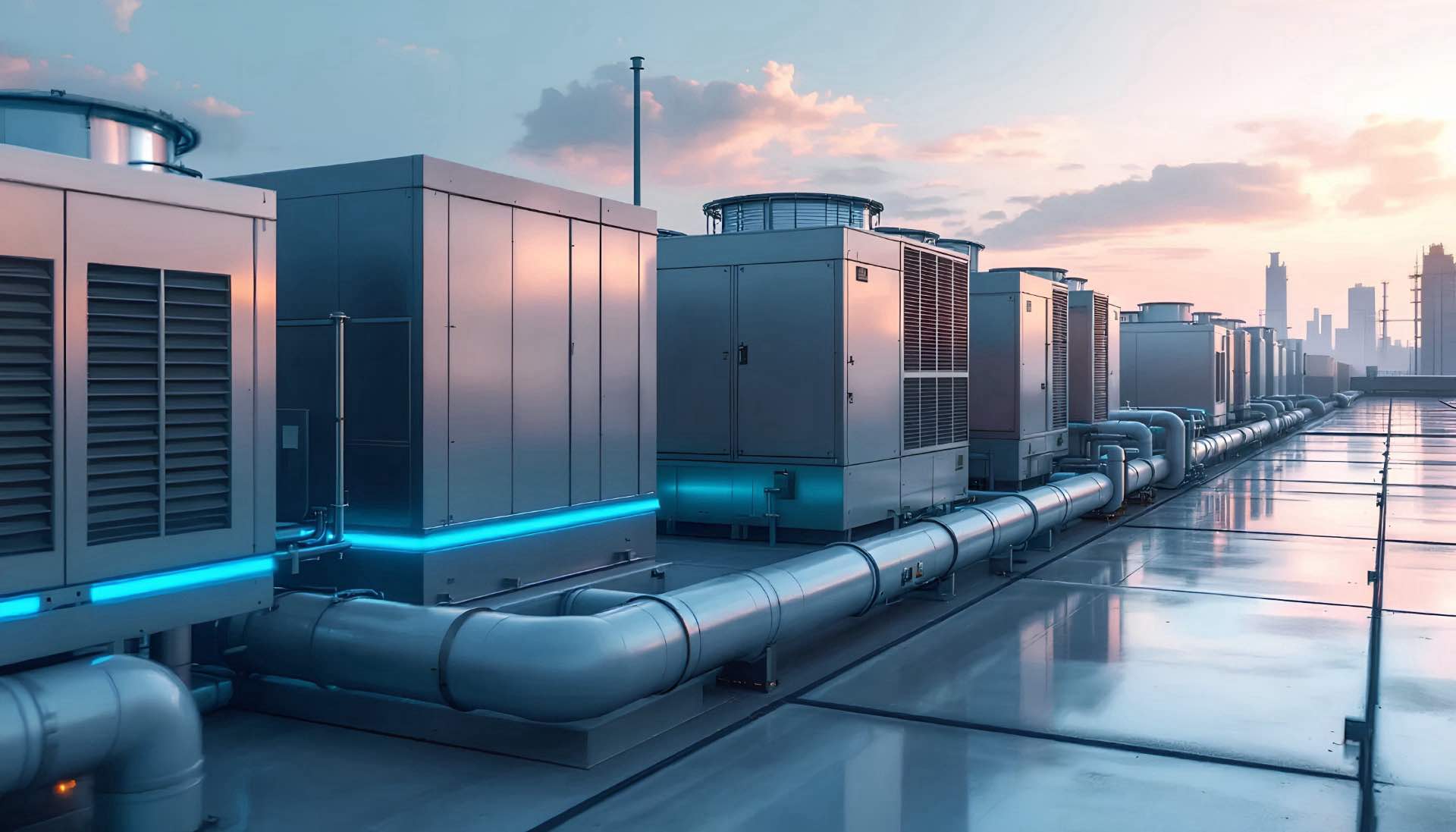
Air handling units (AHUs) move and condition large air volumes in hvac ventilation systems. They contain supply and return fans for ventilation systems, heating systems coils, cooling systems coils, air quality filters, humidifiers, and mixing boxes. Outdoor air for ventilation systems mixes with return air from occupied spaces. The blend passes through air quality filters to remove particles. Heating systems coils and cooling systems coils adjust temperature and humidity. Fans in ventilation systems push conditioned air through supply ducts to diffusers in each zone. Return grilles collect room air and route it back to hvac AHUs maintaining air quality.
Fan coil units (FCUs) provide local hvac conditioning in individual rooms with integrated heating systems and cooling systems. Hot or chilled water flows from a central hvac plant to the FCU coil. A small fan blows room air over the heating systems or cooling systems coil. Occupants adjust fan speed and water flow to control heating systems, cooling systems, and air quality comfort. FCUs work well in hotels where each guest wants independent hvac control of heating systems, cooling systems, and air quality.
Heating Systems – Boilers, Furnaces, Heat Pumps
Boilers form the foundation of many hvac heating systems by heating water or generating steam. Gas-fired boilers in heating systems burn natural gas or propane with efficiencies reaching 95% in condensing models. Oil-fired heating systems suit locations without gas service. Electric boilers in heating systems offer simple installation but higher operating costs. Hot water from heating systems circulates through pipes to radiators, baseboards, or reheat coils in hvac air handlers. Steam-based heating systems use latent heat of vaporization for rapid response but require careful pressure control in heating systems piping.
Furnaces provide direct-fired heating systems that heat air directly for hvac applications. A burner in heating systems heats a heat exchanger. A blower in heating systems pushes indoor air over the exchanger and into hvac supply ducts maintaining air quality. Furnaces respond quickly to thermostat calls in heating systems. They’re common in residential hvac heating systems and light commercial heating systems where ductwork already exists.
Heat pumps represent efficient heating systems that move thermal energy rather than generating it through combustion like traditional heating systems. Heat pump heating systems work like cooling systems in reverse. In heating mode, refrigerant in heating systems absorbs heat from outdoor air or ground loops and releases it indoors. In cooling mode, the cycle reverses. Air-source heat pumps in heating systems lose efficiency when outdoor temperatures drop below freezing. Geothermal heating systems tap stable underground temperatures for consistent year-round performance. Heat pump heating systems excel in moderate climates.
Ventilation Systems – Fans, Ducts and Airflow Control
Mechanical ventilation systems supply fresh outdoor air and exhaust stale indoor air in hvac installations to maintain air quality. Building codes specify minimum ventilation systems rates based on occupancy type and density for air quality compliance. Supply fans in ventilation systems overcome duct pressure drop to deliver outdoor air to spaces enhancing air quality. Exhaust fans in ventilation systems remove moisture, odors, and contaminants from bathrooms, kitchens, and laboratories protecting air quality.
Ductwork conveys air in ventilation systems with minimal leakage and noise for optimal air quality. Sheet metal ducts in ventilation systems offer durability and smooth interior surfaces that resist microbial growth protecting air quality. Flexible ducts simplify ventilation systems installation in tight spaces but restrict airflow if compressed. Fabric ducts distribute air in ventilation systems evenly in high-ceiling spaces like gymnasiums. You’ll seal joints in ventilation systems with mastic to prevent energy-wasting leaks affecting air quality.
Dampers regulate airflow in ventilation systems and protect air quality. Motorized dampers in ventilation systems respond to control signals from hvac building automation systems. Fire dampers in ventilation systems close automatically when smoke detectors activate, preventing fire spread through ducts. Backdraft dampers in ventilation systems allow exhaust airflow while blocking reverse flow protecting air quality.
Air Conditioning and Cooling Systems – Chillers and DX Units
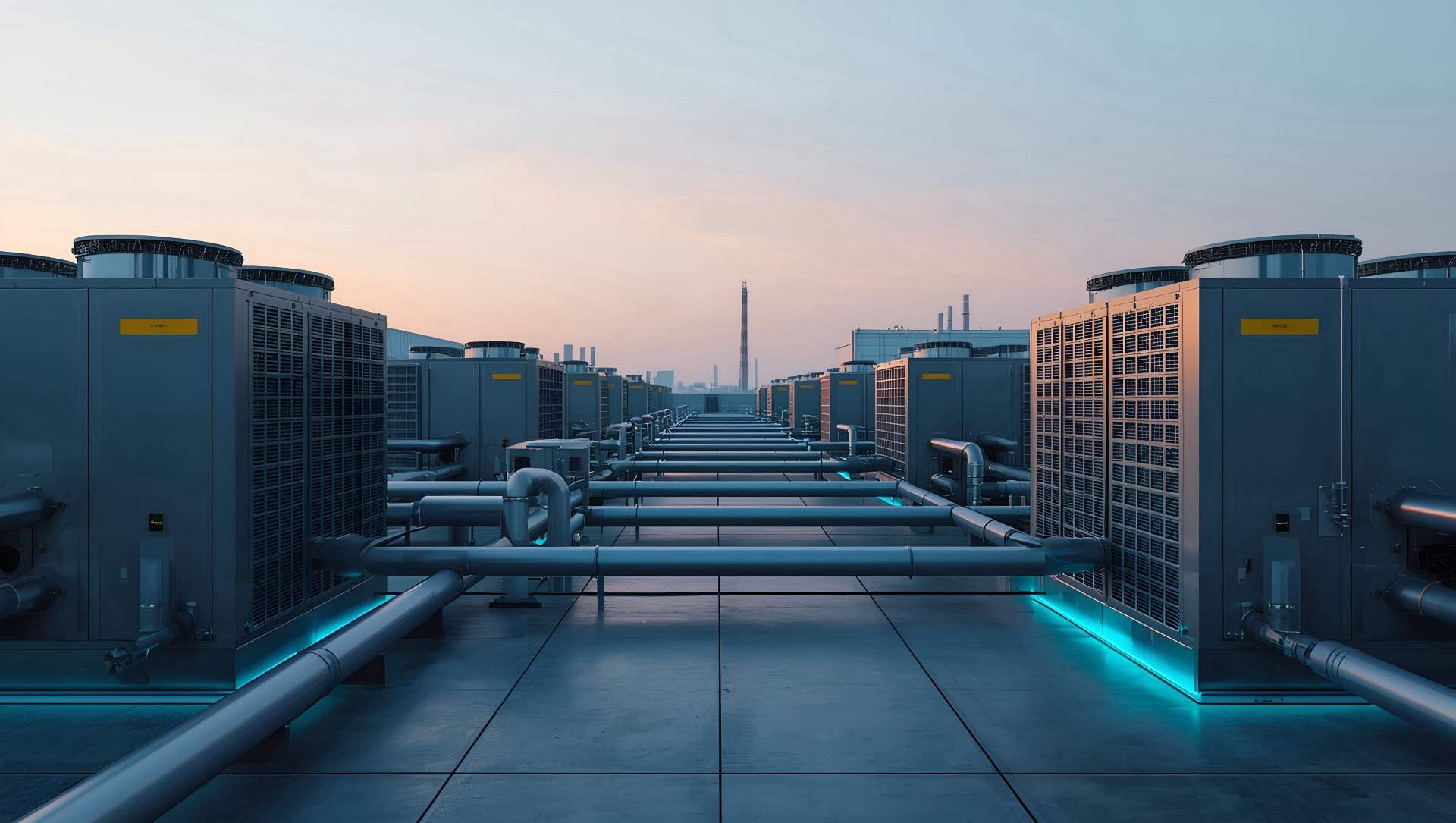
Direct expansion (DX) cooling systems evaporate refrigerant inside coils located directly in the conditioned space or hvac air handler. Refrigerant in cooling systems absorbs heat as it evaporates, cooling the air passing over the coil. The compressor in cooling systems pumps hot, high-pressure vapor to the outdoor condenser where fans in cooling systems reject heat to the atmosphere. DX cooling systems respond quickly and suit distributed hvac applications like rooftop units and split cooling systems.
Chilled water cooling systems centralize refrigeration equipment in hvac mechanical rooms. Water-cooled chillers in cooling systems use cooling towers to reject heat, achieving higher efficiency than air-cooled cooling systems. Air-cooled chillers in cooling systems simplify installation by eliminating towers. Chilled water from cooling systems circulates through piping to AHUs and FCUs throughout the hvac building. This cooling systems approach scales well for large hvac facilities and allows backup cooling systems for redundancy.
Variable refrigerant flow (VRF) cooling systems represent advanced hvac platforms connecting one or more outdoor condensing units to many indoor fan coils via refrigerant piping. Each coil in VRF cooling systems operates independently. Some zones can use heating systems while others employ cooling systems by recovering heat. VRF cooling systems offer excellent hvac energy efficiency.
HVAC Controls, Automation and Monitoring
HVAC Controls and Building Management Systems
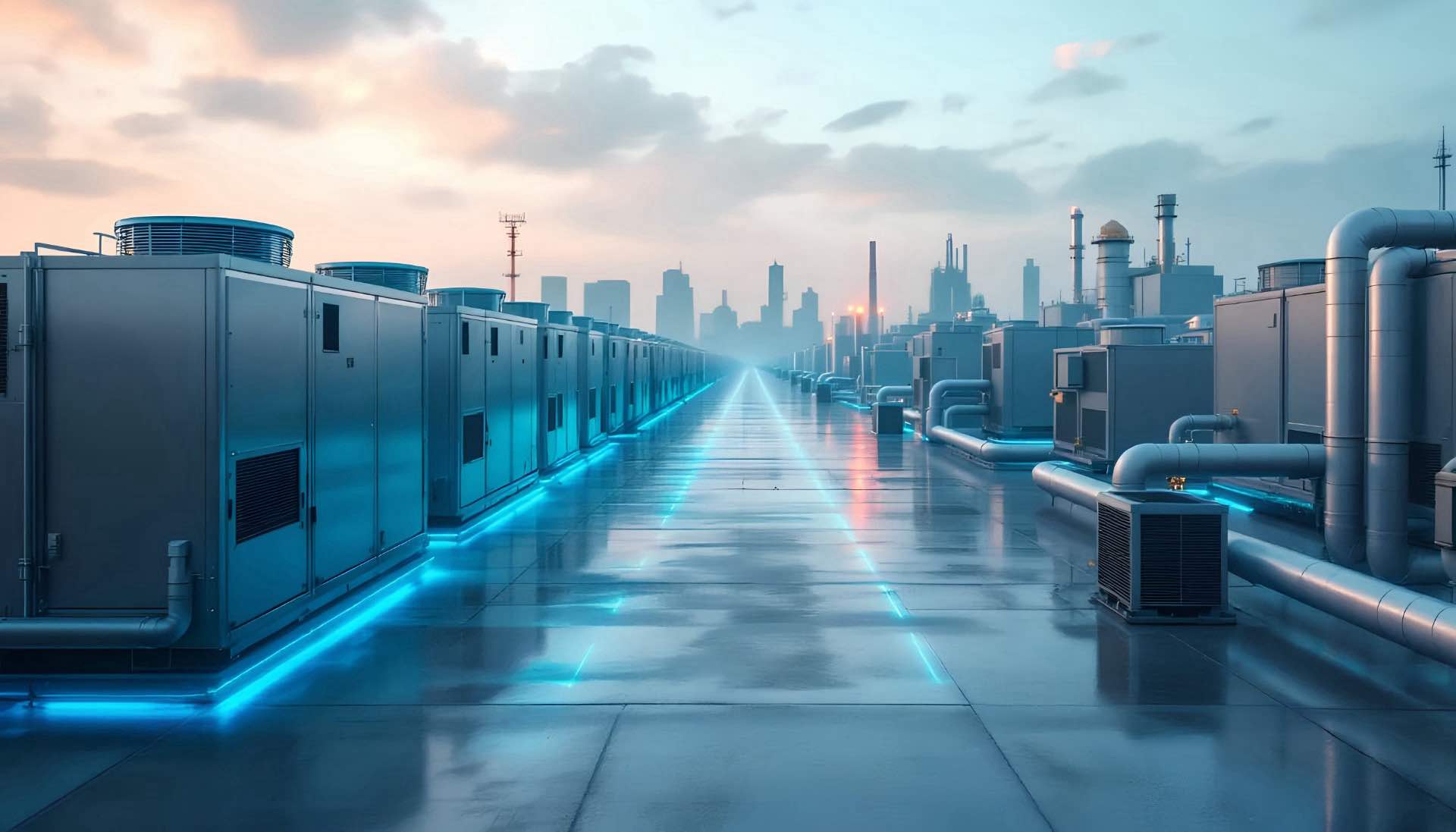
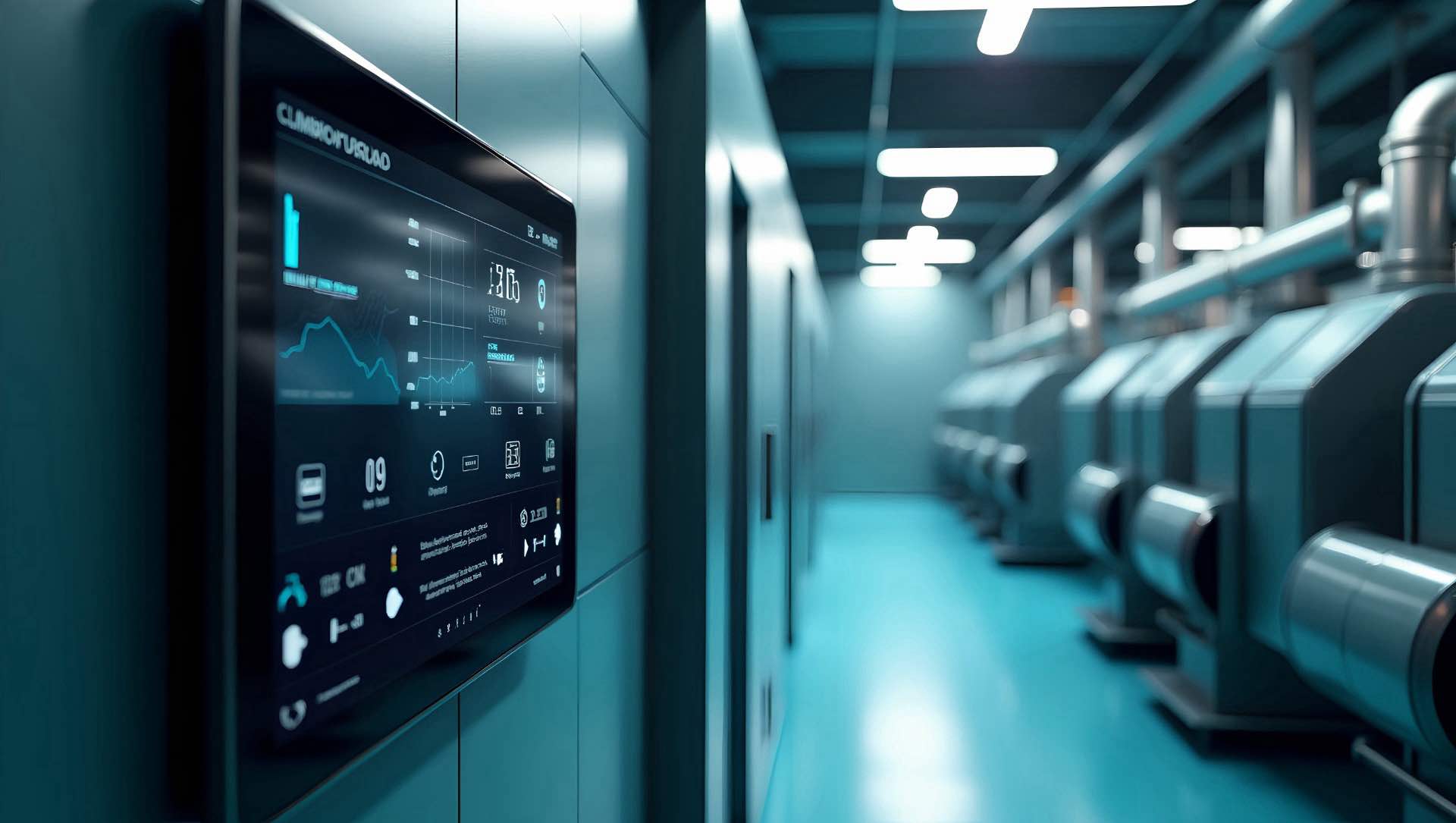
Building management systems (BMS) integrate hvac mechanical, electrical, and plumbing systems into unified platforms controlling heating systems, cooling systems, ventilation systems, and air quality equipment. Operators monitor hvac equipment status, adjust heating systems and cooling systems setpoints, and respond to ventilation systems and air quality alarms from central workstations. Trend data reveals hvac performance degradation in heating systems, cooling systems, ventilation systems, or air quality before failures occur. Direct digital controllers (DDCs) execute hvac control sequences at heating systems, cooling systems, ventilation systems, and air quality equipment level, communicating with the BMS over BACnet or Modbus networks.
Control sequences coordinate hvac equipment operation for heating systems, cooling systems, ventilation systems, and air quality management. Morning warm-up starts heating systems an hour before occupancy. Night setback reduces heating systems and cooling systems temperature during unoccupied periods. Optimal start algorithms learn building thermal behavior to minimize hvac runtime in heating systems and cooling systems while meeting occupancy comfort targets. Demand-controlled ventilation systems modulate outdoor air based on measured CO₂ levels, saving hvac energy without sacrificing air quality.
Sensors, Thermostats and Field Controllers
Temperature sensors measure dry-bulb air temperature. Thermistors and resistance temperature detectors (RTDs) offer accuracy within ±0.5°C. Placement matters—avoid direct sunlight, drafts, and heat sources that skew readings. Humidity sensors use capacitive or resistive elements to track moisture levels. They drift over time and require periodic calibration.
Thermostats provide local temperature control. Programmable models adjust setpoints by time of day. Smart thermostats connect to Wi-Fi, allowing remote control via smartphone apps. They learn occupancy patterns and optimize schedules automatically. Networked thermostats integrate with BMS platforms for centralized oversight while maintaining local override capability.
Pressure sensors monitor static pressure in ducts and differential pressure across filters. Rising filter pressure drop signals when replacement is needed. Airflow stations measure volumetric flow rates to verify proper ventilation delivery.
Control Strategies for Comfort and Stability
Proportional-integral-derivative (PID) algorithms maintain stable control without hunting or overshooting. You’ll tune PID parameters—gain, integral time, and derivative time—to match equipment response characteristics. Aggressive tuning reduces offset but risks oscillation. Conservative settings ensure stability at the cost of slower response.
Sequencing prevents equipment conflicts. Economizer dampers close before mechanical cooling starts. Reheat coils activate only after cooling coils satisfy dehumidification requirements. Interlocks enforce safety rules like disabling supply fans if smoke detectors trip or freezestats sense coil icing.
Load reset adjusts supply temperatures based on demand. If all zones are satisfied, the system raises chilled water temperature or lowers hot water temperature. Compressors and boilers operate more efficiently at reduced lift. Savings compound over thousands of operating hours.
Remote Monitoring, Alarms and Trend Analysis
Alarm systems notify technicians when parameters exceed limits. High discharge air temperature might indicate a failing compressor. Low suction pressure could signal refrigerant leaks. Timely intervention prevents minor issues from cascading into expensive failures.
Trend logs record temperatures, pressures, flows, and power consumption at regular intervals. You’ll graph trends to spot seasonal patterns, equipment degradation, and control problems. Persistent temperature offsets might reveal stuck dampers or miscalibrated sensors. Runtime hour tracking schedules preventive maintenance tasks.
Remote access enables off-hours troubleshooting and setpoint adjustments. VPN connections secure communications between field sites and central engineering offices. Cloud-based platforms eliminate on-site servers, simplifying IT infrastructure.
Indoor Air Quality, Energy Efficiency and Optimization
Indoor Air Quality (IAQ) Requirements and Metrics
Occupants deserve clean, healthy air from hvac installations with proper air quality management. Carbon dioxide concentration reflects ventilation systems effectiveness in air quality—levels above 1000 ppm indicate insufficient outdoor air from ventilation systems compromising air quality. Volatile organic compounds (VOCs) off-gas from furnishings and cleaners affecting air quality. Particulate matter in air quality includes dust, pollen, mold spores, and combustion byproducts removed by hvac filtration. Relative humidity between 40–60% maintained by hvac heating systems and cooling systems minimizes mold growth and pathogen transmission protecting air quality.
ASHRAE Standard 62.1 specifies minimum ventilation systems rates for commercial hvac buildings to ensure air quality. Rates vary by space type—offices need 17 cubic meters per hour per person from ventilation systems while gymnasiums require 34 for air quality. Filtration standards rate hvac air quality filter performance. MERV 8 filters in hvac systems remove large particles improving air quality. MERV 13 filters in hvac systems capture bacteria protecting air quality. HEPA filters in critical hvac applications trap 99.97% of 0.3-micron particles for exceptional air quality.
Filtration, Fresh Air and Ventilation Strategies
Pre-filters in hvac systems protect downstream cooling systems coils and final air quality filters from large debris. You’ll replace air quality filters quarterly or when pressure drop reaches limits. Final filters in hvac systems capture fine particles improving air quality. Higher-efficiency air quality filters improve indoor conditions but resist airflow more in ventilation systems.
Minimum outdoor air from ventilation systems dilutes contaminants maintaining air quality. Energy costs rise when hvac cooling systems condition hot, humid outside air in summer or hvac heating systems warm cold, dry outside air in winter through ventilation systems. Demand-controlled ventilation systems match outdoor air intake to actual occupancy using CO₂ sensors for air quality, allowing hvac savings. Savings in hvac ventilation systems reach 30% in spaces with variable occupancy while maintaining air quality.
Economizers in hvac cooling systems provide free cooling when outdoor air is cooler than return air, improving energy efficiency in cooling systems. Dampers in ventilation systems open fully, admitting outdoor air for free cooling systems operation. Compressors in cooling systems remain off, slashing hvac energy consumption. Dry-bulb economizers work in arid climates for cooling systems. Enthalpy economizers in cooling systems suit humid regions.
Energy Efficient HVAC Operation and Optimization
Variable-speed drives (VSDs) control hvac motor speed electronically in heating systems pumps, cooling systems compressors, and ventilation systems fans. Fans in ventilation systems and pumps in heating systems or cooling systems operating at reduced speeds consume far less power in hvac applications. Affinity laws show that halving flow in ventilation systems or heating systems cuts power to one-eighth. Payback periods on VSD retrofits for hvac heating systems, cooling systems, and ventilation systems often fall under two years.
Chiller optimization in hvac cooling systems adjusts setpoints based on real-time loads. Higher chilled water temperatures in cooling systems reduce compressor lift when cooling demand is light. Sequencing multiple cooling systems chillers to run at their most efficient loading points beats running one cooling systems unit at low part-load. Free cooling in hvac cooling systems via waterside economizers uses cold outdoor air to chill condenser water directly in cooling systems.
Heat recovery in hvac systems captures waste heat from exhaust air in ventilation systems or refrigeration in cooling systems. Heat recovery ventilators in hvac ventilation systems exchange thermal energy between exhaust and incoming air streams using air-to-air heat exchangers. Efficiency in hvac heat recovery ventilation systems reaches 70%, dramatically reducing heating systems and cooling systems loads in buildings with high ventilation systems requirements.
Common Energy Saving Measures and Retrofits
LED lighting reduces internal heat gains by 50–70% compared to fluorescent or incandescent lamps, shrinking cooling loads. Window films block solar heat gain without compromising daylight. High-efficiency motors replace old units at end of life.
Building envelope improvements cut loads at the source. Air sealing reduces infiltration. Insulation upgrades lower conduction losses. Low-emissivity glazing reflects radiant heat while transmitting visible light.
Recommissioning optimizes existing systems without capital investment. You’ll verify that sensors read accurately, dampers move freely, and control sequences function as designed. Simple fixes like rebalancing airflow or adjusting schedules often yield 10–15% energy savings.
Lifecycle – Installation, Commissioning, Operations and Maintenance
Installation Planning and Site Coordination
Site surveys document existing conditions. You’ll measure ceiling heights, locate structural beams, identify electrical panels, and map pipe and duct routes. Clash detection uses 3D models to prevent conflicts between mechanical, electrical, and plumbing systems before fabrication begins.
Equipment access must accommodate future replacements. Chillers won’t fit through standard doorways—you’ll need removable wall panels or roof hatches. Rooftop equipment requires cranes. Rigging plans detail lifting points, load paths, and safety barriers. Staging areas store materials without obstructing construction traffic.
Utility connections require coordination with local providers. Gas service might need pressure upgrades. Electrical service entrances handle increased loads. Water and sewer taps accommodate condenser water makeup and condensate drains.
HVAC Commissioning, Testing and Balancing
Commissioning verifies that installed systems meet design intent. Functional testing exercises every control sequence under simulated conditions. Does the morning warm-up sequence start equipment in the correct order? Do safeties shut down fans when freeze-stats detect coil icing?
Test and balance (TAB) adjusts airflows and water flows to design values. TAB technicians measure duct velocities using pitot tubes and micromanometers. They adjust dampers iteratively until each diffuser delivers the specified flow rate within ±10%. Hydronic balancing sets pump speeds and valve positions to deliver design flow to every coil without starving distant branches.
Acceptance testing demonstrates capacity. You’ll run chillers at full load during hot weather to confirm rated tonnage. Boilers fire at maximum input to verify heating capacity. Documentation packages include control diagrams, equipment schedules, operating manuals, and warranty certificates.
Operations, Preventive Maintenance and Service
Filter replacement maintains airflow and air quality. Visual inspections occur monthly. Pressure drop gauges trigger replacements when resistance exceeds manufacturer limits. Clogged filters force fans to work harder, wasting energy and risking motor burnout.
Coil cleaning removes dirt that insulates heat transfer surfaces. Chemical cleaning dissolves scale in water-cooled condenser tubes. Brush cleaning removes debris from air-cooled coils. Clean coils transfer heat efficiently, reducing energy consumption and extending equipment life.
Belt inspections check tension and wear. Loose belts slip, reducing airflow and overheating motors. Worn belts break unexpectedly, causing outages. You’ll stock spares and schedule replacements based on runtime hours.
Refrigerant management includes leak detection, pressure checks, and charge verification. Leaks waste refrigerant and degrade performance. EPA regulations mandate leak repair when annual loss rates exceed thresholds. Proper charging ensures optimal heat transfer and compressor longevity.
Documentation, Logs and Performance Reporting
Maintenance logs record all service activities. You’ll track dates, tasks performed, parts replaced, and technician names. Logs demonstrate regulatory compliance and support warranty claims. Preventive maintenance schedules list tasks by frequency—monthly, quarterly, annually. Checklists ensure nothing gets overlooked.
Energy dashboards display consumption trends. Degree-day normalization accounts for weather variations when comparing month-to-month performance. Benchmarking rates your building against peers using tools like Energy Star Portfolio Manager. Top performers achieve recognition and lower operating costs.
HVAC Safety, Compliance and Application Segments
Safety, Policy and Code Compliance
Electrical safety requires lockout-tagout procedures before servicing equipment. Only qualified electricians work on high-voltage systems. Arc flash labels warn of electrocution hazards and specify required personal protective equipment.
Refrigerant handling demands EPA Section 608 certification. Technicians recover refrigerant before opening sealed systems. Venting refrigerant to atmosphere incurs severe penalties. Proper disposal prevents ozone depletion and climate impacts.
Mechanical room safety mandates clear egress paths, fire extinguishers, and emergency shutoffs. Confined space entry protocols apply to tanks and large ducts. Atmospheric testing confirms adequate oxygen and absence of toxic gases before entry.
Code compliance starts at design. Building codes specify construction standards. Energy codes set minimum efficiency levels. Fire codes require smoke dampers and fire-rated penetrations. Mechanical codes govern refrigerant quantities, combustion air, and venting. Inspectors verify compliance before issuing occupancy permits.
Commercial and Office Buildings
Commercial offices prioritize occupant comfort and energy efficiency. Open-plan layouts need uniform temperature distribution. Private offices and conference rooms benefit from individual zone control. Economizers provide free cooling during shoulder seasons. CO₂-based demand-controlled ventilation reduces energy waste when spaces are partially occupied.
Night setback raises cooling setpoints and lowers heating setpoints during unoccupied hours. Savings reach 10–20% with minimal comfort impact. Morning warm-up starts equipment early to reach setpoints before occupants arrive. Optimal start algorithms learn building thermal mass to minimize runtime.
Healthcare, Data Centers and Critical Environments
Hospitals demand precise environmental control and reliability. Operating rooms maintain positive pressure to prevent contamination. Isolation rooms use negative pressure to contain infectious diseases. HEPA filtration removes airborne pathogens. Humidity control prevents static discharge near sensitive equipment and inhibits microbial growth. Redundant equipment ensures continuous operation during maintenance or failures.
Data centers require precision cooling year-round. Servers generate massive heat loads—kilowatts per rack. Hot aisle/cold aisle layouts separate supply and return air paths. In-row coolers place cooling units directly between server rows for tight temperature control. Free cooling via economizers or evaporative systems reduces energy consumption when outdoor conditions permit.
HVAC Systems in Industrial and Hospitality Applications
Industrial facilities manage process loads and ventilation requirements. Ovens, furnaces, and chemical reactors emit heat. Machining operations generate airborne contaminants. Makeup air units replace air exhausted by local ventilation systems. Destratification fans circulate air in high-bay spaces to eliminate temperature gradients. Radiant heaters warm workers directly without heating the entire volume.
Hotels prioritize guest comfort and individual control. Each room has a dedicated fan coil unit or packaged terminal air conditioner. Guests adjust temperature via local thermostats. Unoccupied room setback saves energy when guests check out. Smart sensors detect occupancy and adjust settings automatically. Efficient designs improve guest satisfaction while controlling operating costs.
Future Trends in Smart HVAC and Connected Buildings
Internet of Things (IoT) sensors proliferate throughout buildings. Wireless devices monitor temperature, humidity, occupancy, and equipment performance. Cloud-based analytics process data streams to identify optimization opportunities. Machine learning algorithms predict equipment failures before breakdowns occur, enabling proactive maintenance.
Digital twins create virtual replicas of physical systems. Engineers test control strategies in simulation before deploying to live equipment. Augmented reality overlays equipment information and maintenance instructions onto technician headsets during service calls.
Electrification replaces fossil fuel equipment with electric heat pumps. Rooftop solar panels and battery storage shift buildings toward net-zero energy. Grid-interactive systems modulate loads in response to utility demand signals, supporting renewable energy integration.
Conclusion and Best Practices for System Design
Key Takeaways on HVAC Systems and Components
Environmental control infrastructure integrates thermal generation, air distribution, and automated regulation to deliver comfortable, healthy indoor environments. You’ve seen how load calculations drive equipment selection, how control sequences coordinate operation, and how maintenance practices sustain performance over decades. Successful projects balance first cost against lifecycle energy consumption, recognizing that efficient designs pay dividends year after year.
Checklist for Evaluating HVAC Performance and IAQ
Review these items regularly:
- Verify actual airflows match design values at diffusers and grilles
- Confirm temperature and humidity sensors read accurately
- Check filter pressure drop and replace when limits are reached
- Inspect belts for wear and proper tension
- Test refrigerant charge and repair leaks promptly
- Monitor energy consumption trends and investigate anomalies
- Validate that control sequences execute as programmed
- Ensure maintenance logs are complete and up to date
Design and Operations Best Practices for Engineers
Start with accurate load calculations—guesswork leads to oversized, inefficient systems. Select equipment with high-efficiency ratings that fit actual operating conditions. Design for maintainability with adequate clearances and access. Commission thoroughly to catch installation errors before they become operational headaches. Train operating staff on control functions and troubleshooting. Track energy performance and pursue continuous improvement.
How HVAC Impacts Comfort, Health and Energy Costs
Buildings shelter us, but HVAC makes them livable through integrated heating systems, ventilation systems, cooling systems, and air quality management. Properly designed hvac infrastructure with efficient heating systems keeps occupants warm without dry air discomfort. Well-balanced hvac ventilation systems introduce fresh air that sustains alertness and productivity while maintaining air quality. Efficient hvac cooling systems remove heat and humidity so people can focus on work instead of discomfort. Together, hvac heating systems, ventilation systems, cooling systems, and air quality technologies deliver the environmental standards that protect health while minimizing the energy costs that dominate operational budgets. Modern hvac installations with advanced heating systems, smart ventilation systems, high-efficiency cooling systems, and monitored air quality serve occupants well. Master these hvac principles including heating systems design, ventilation systems engineering, cooling systems selection, and air quality management and you’ll design facilities that serve occupants well while treading lightly on the planet.